Trust HVAC B2B Website

Project Overview

Trust Air Conditioners is an HVAC company expanding into the North American market with a focus on high-quality heating and cooling solutions at competitive prices. To compete with established B2B HVAC brands, the company needed a website that felt credible, easy to navigate, and strong enough to support both product discovery and lead generation.

This project involved redesigning the website from scratch in Webflow, restructuring the product architecture, and creating a more scalable content system. The goal was to turn an outdated website into a stronger business tool that could support trust-building, quote requests, warranty access, and long-term product growth.

Tools / Skills:
  • Webflow
  • Figma
  • CMS architecture planning
Role
  • UX-UI
  • Wireframing
  • CMS setup
  • Web Development
Date:
2024
Collaborator
Adrian – Co-developer / Designer
Amir Kian – Project Manager
circle-icon 1

Problem

The previous website was an outdated WordPress build with an unstructured CMS, limited usability, and no clear handoff documentation. As Trust prepared to enter the North American market, the website was not strong enough to support that move.

Some of the main issues were:

  • The site did not meet the visual and structural expectations of a modern B2B HVAC company.

  • Product information was difficult to organize and browse clearly.

  • The CMS was not user-friendly enough to support a growing catalog.

  • Users could not easily understand which products paired together across categories.

  • Key business features such as quote requests and warranty access needed stronger integration.

  • The website did not communicate enough credibility to attract the right target audience.

Trust needed a cleaner, more scalable platform that balanced functionality with professionalism.

circle-icon 1

Solutions

To address these issues, the website was rebuilt from scratch in Webflow with a stronger focus on trust, structure, and scalability. I helped define the sitemap, reorganize the content structure, and shape the product architecture so users could browse categories more clearly and understand product relationships more easily.

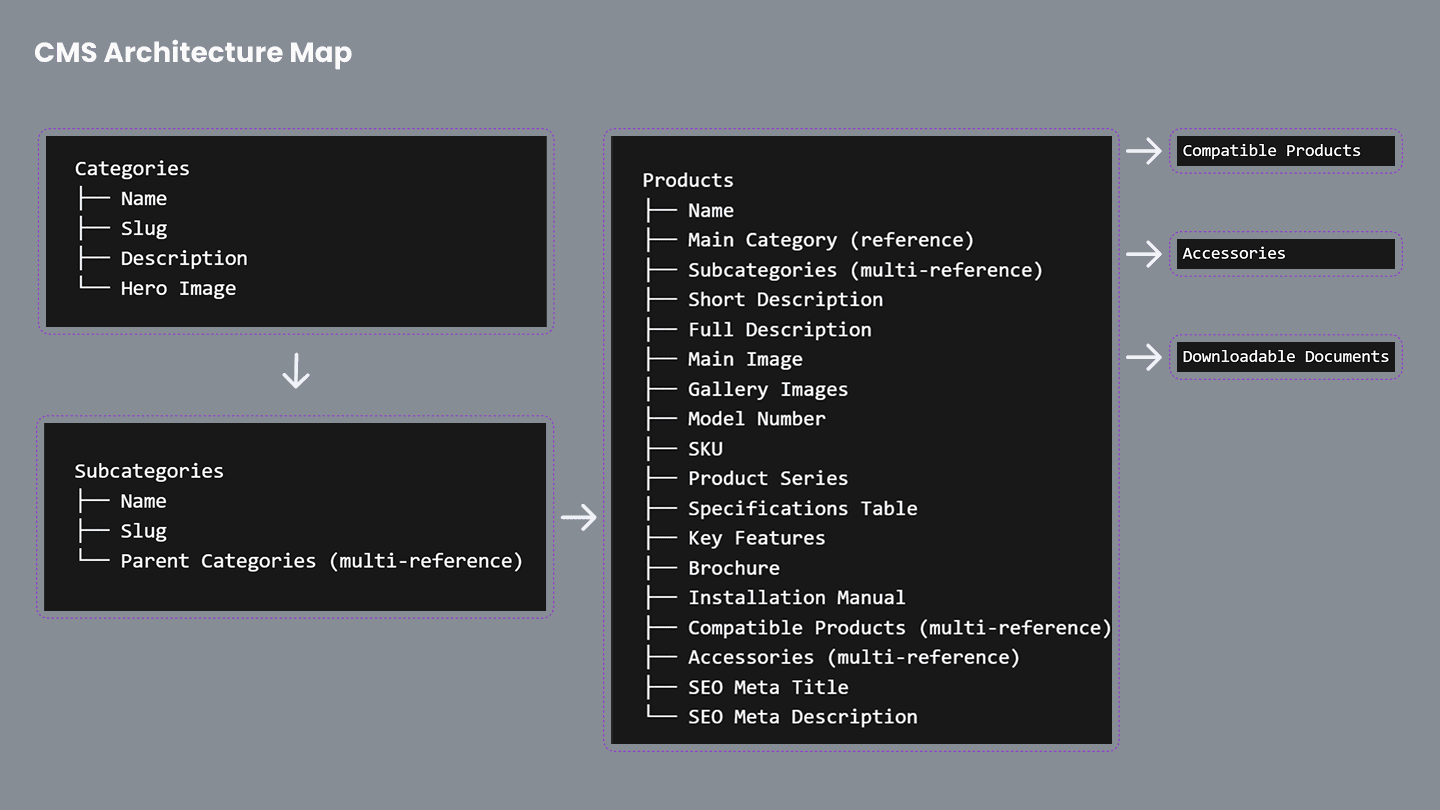
Because the product catalog was complex, a major part of the solution involved improving the CMS logic behind the site. Categories, subcategories, product details, technical specifications, and paired products had to work together in a way that was flexible for the client and understandable for the user.

The redesign also introduced clearer lead-generation pathways through contractor quote forms and a warranty feature, while the cleaner interface and improved content structure helped support stronger SEO and a more credible market presence.

circle-icon 1

Information Architecture

One of the biggest challenges in this project was not only redesigning the interface, but restructuring the website so a complex HVAC catalog could be understood more easily by contractors, dealers, and other business-focused users. The information architecture needed to support product discovery, quote requests, warranty access, and future growth.

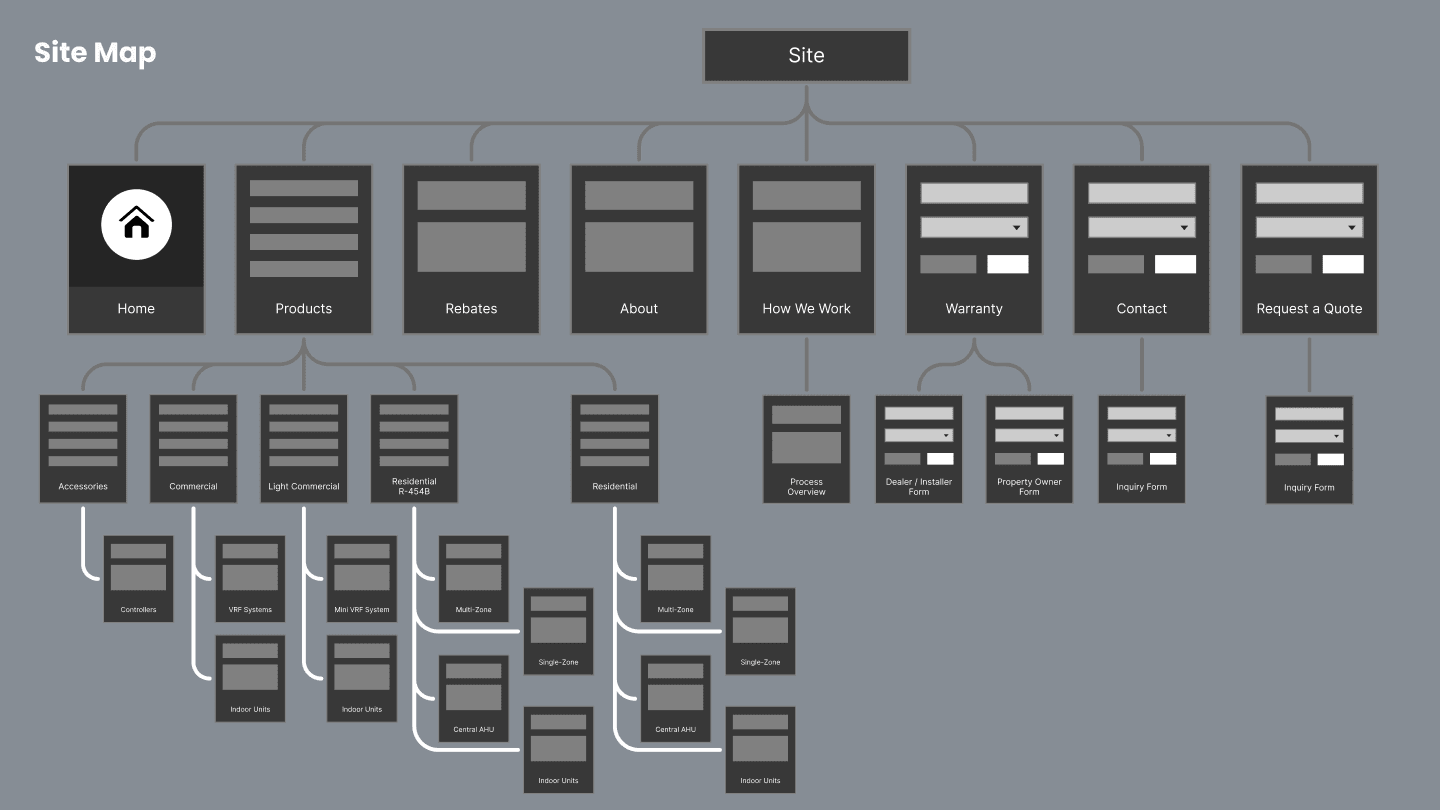
Sitemap Structure

The site was reorganized around clear top-level pathways for products, warranty support, quote requests, and company information. Since the product catalog had multiple layers, the structure needed to reduce confusion while still allowing users to move deeper into categories and subcategories when needed.
circle-icon 1

Design Exploration

Once the structure was clearer, the next step was to translate that logic into a cleaner interface. The design direction needed to feel more credible, more aligned with international B2B standards, and easier to browse for users comparing technical products.

Low-Fidelity Homepage

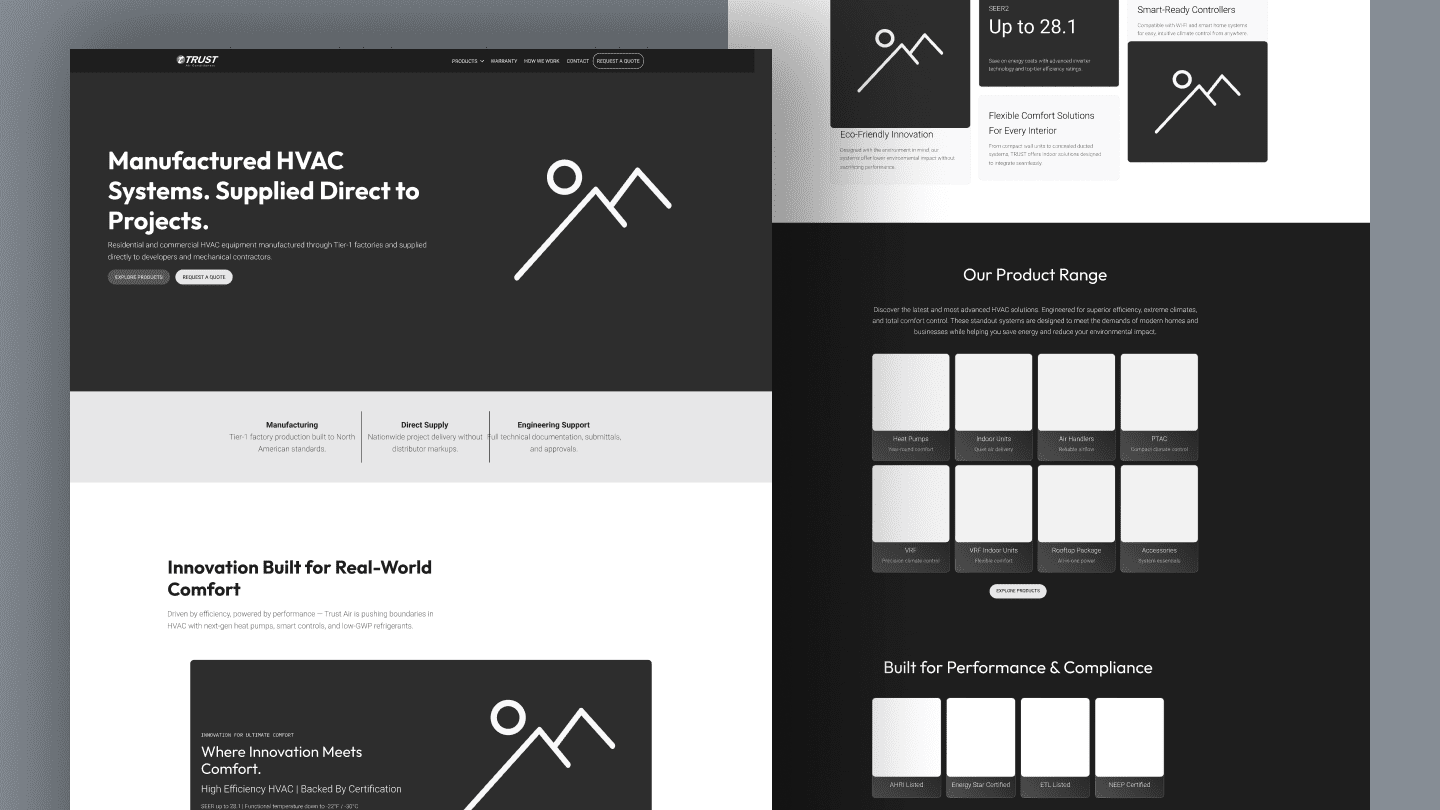
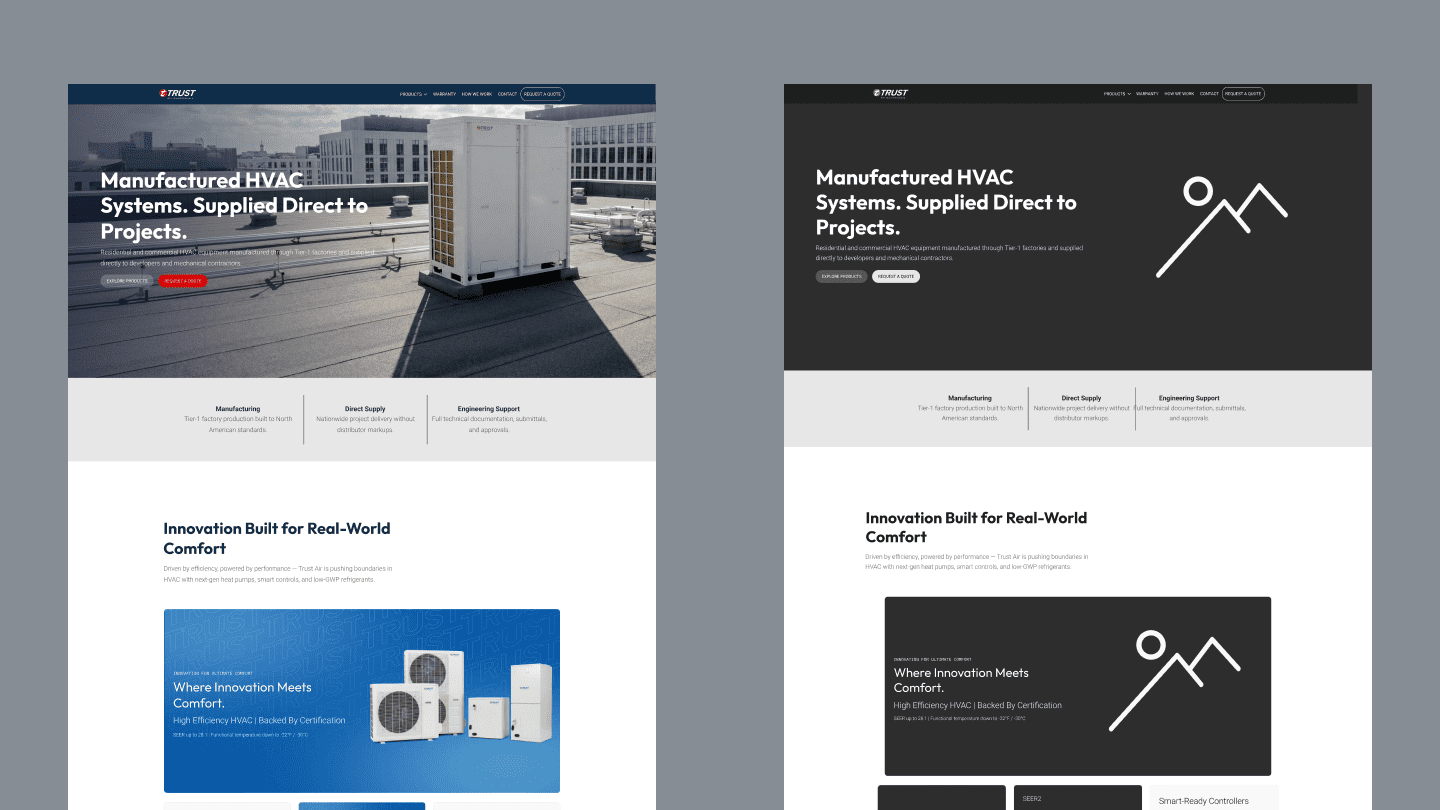
The early homepage wireframe focused on hierarchy and clarity first. The goal was to establish a strong top-level flow that could introduce the brand, surface product categories, and guide users toward important actions such as requesting a quote or exploring product lines.

From Low-Fidelity to High-Fidelity

The transition into the final interface focused on making the experience feel more polished and trustworthy without losing clarity. Product navigation, content grouping, and layout hierarchy were refined so the site could feel more established while still supporting technical browsing.
circle-icon 1

Final Visual Direction

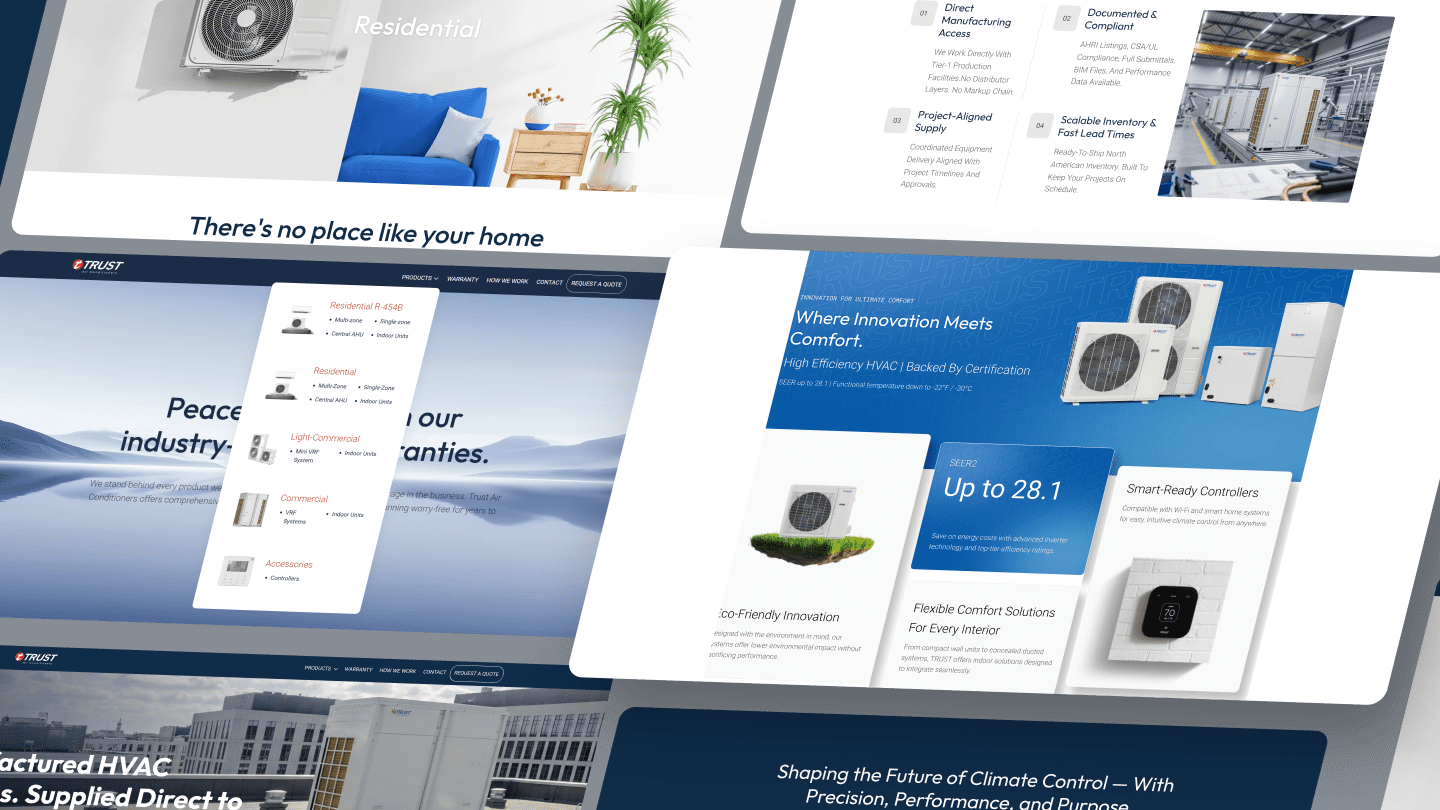
The final interface aimed to make Trust feel more established, modern, and business-ready. The visual system stayed clean and structured, while product-focused sections, large layouts, and a more consistent design language helped communicate professionalism more clearly.

Brand Presentation

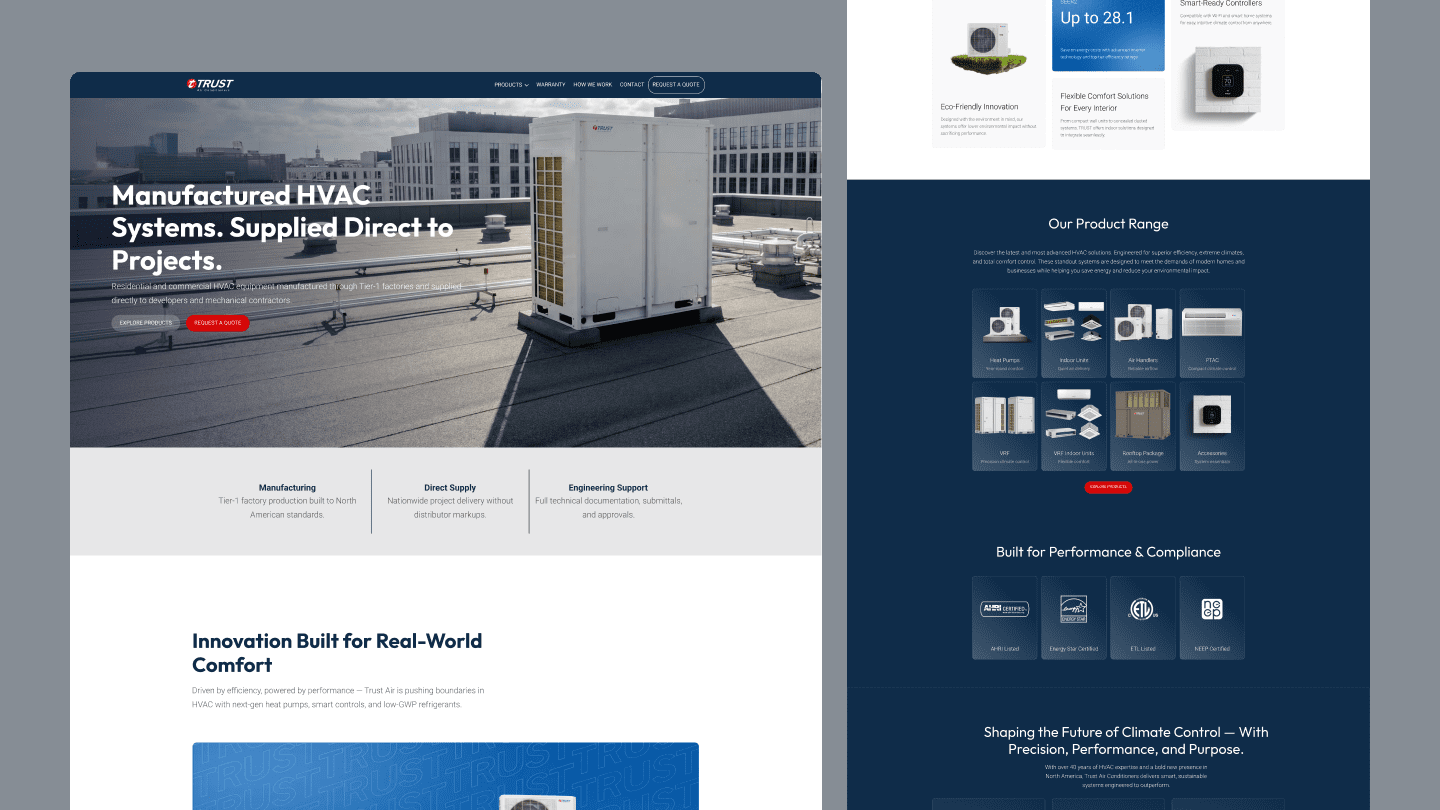
The redesigned website uses a cleaner visual language and more confident layout structure to help Trust feel more credible in a competitive market. This was especially important because the site needed to support market entry and create a stronger first impression for new clients.

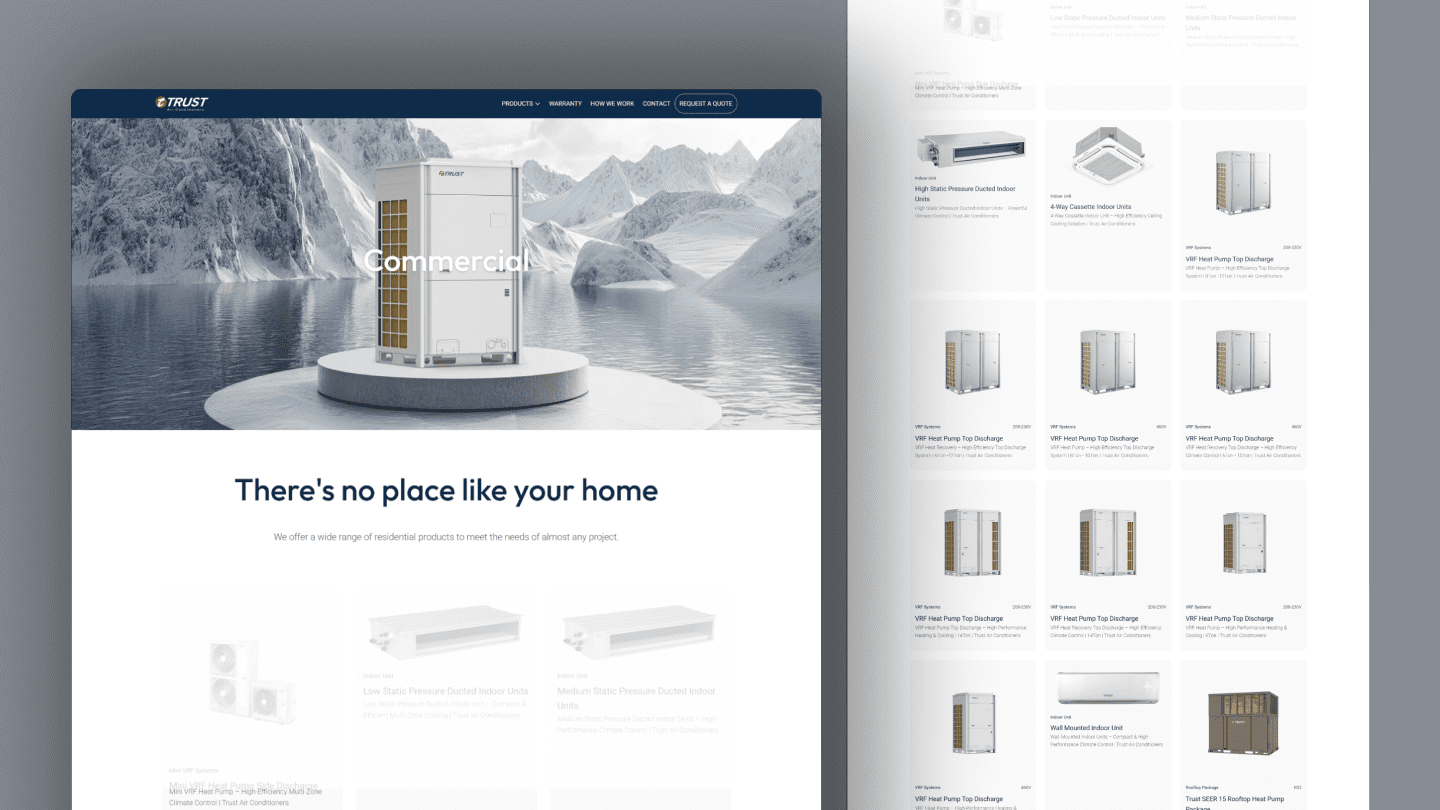
Product-Focused Browsing

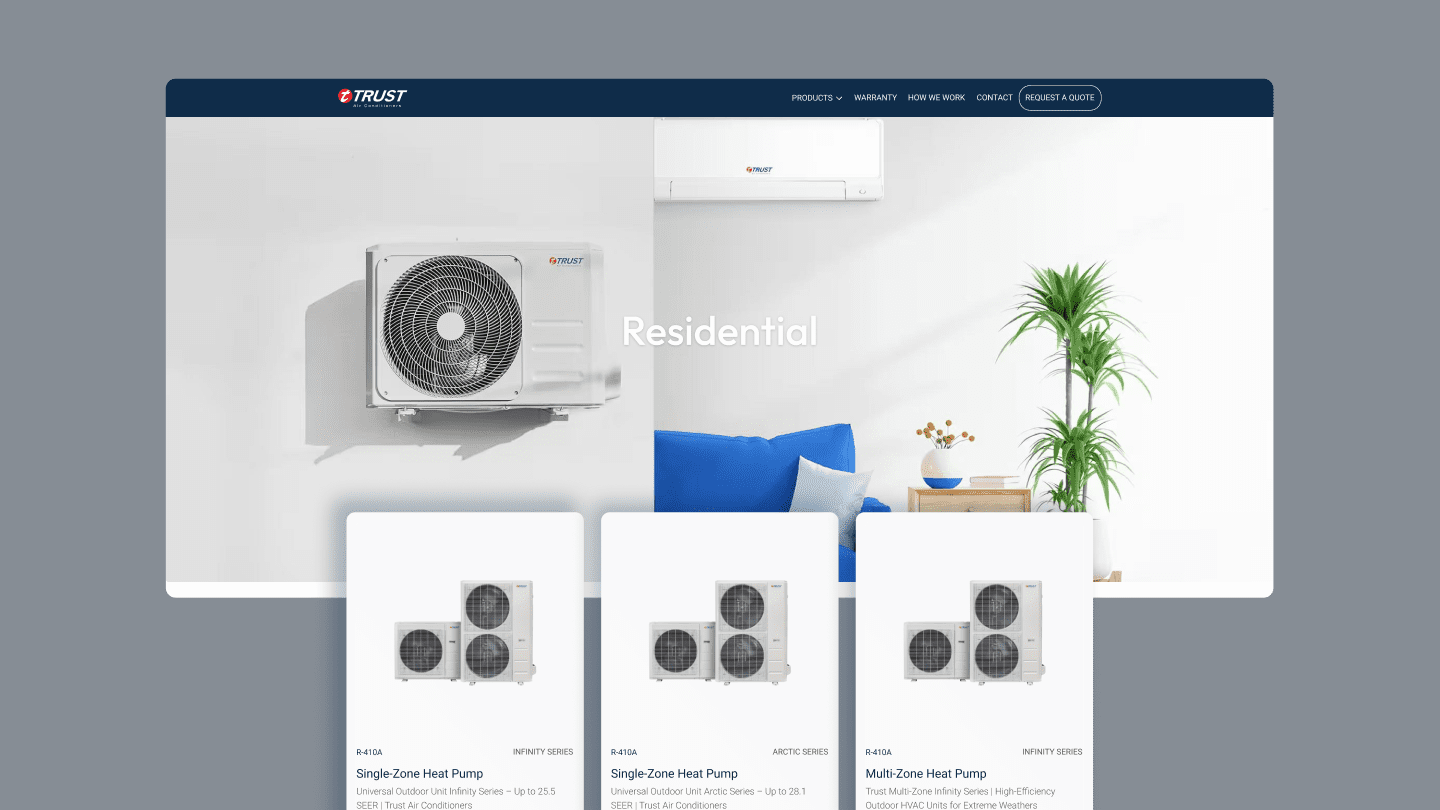
Product entry points were designed to feel organized and easier to scan. Category pages, product cards, and supporting sections were structured to help users move from broad product types into more specific solutions without feeling lost.

Supportive Brand Messaging

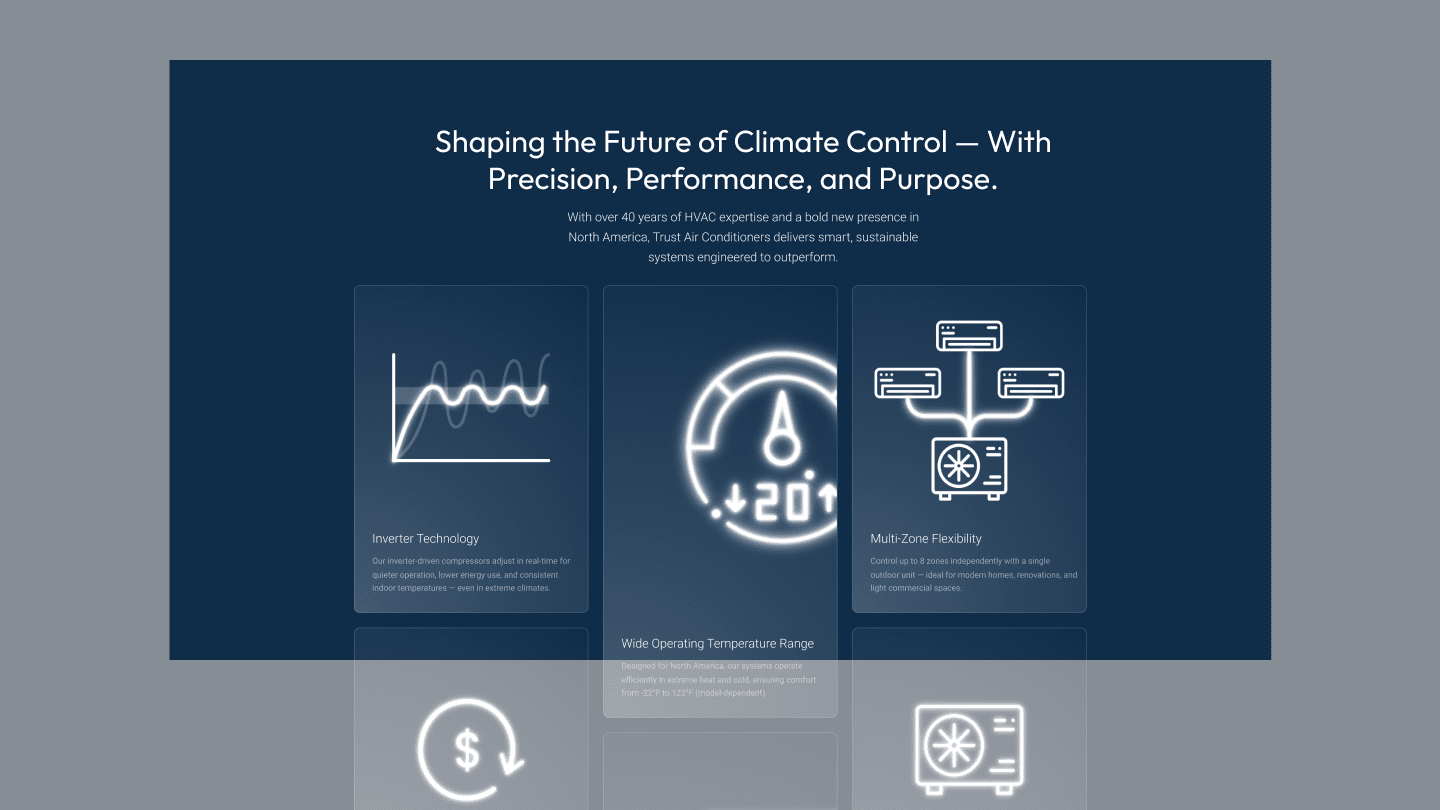
Sections such as sustainability and value messaging helped balance technical information with brand positioning. These moments gave the site more depth and helped reinforce the company’s broader value proposition beyond product specifications alone.
circle-icon 1

Responsive Experience

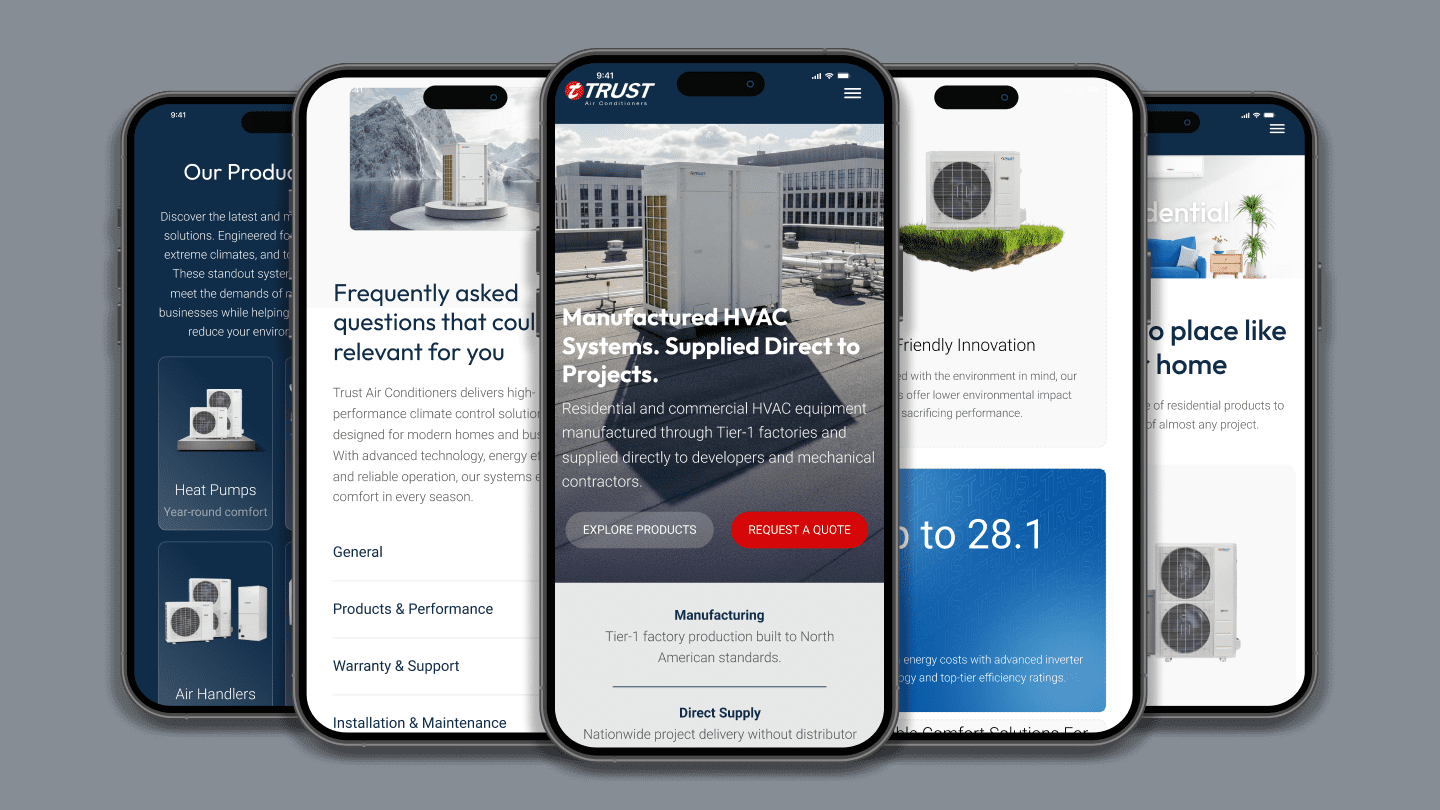
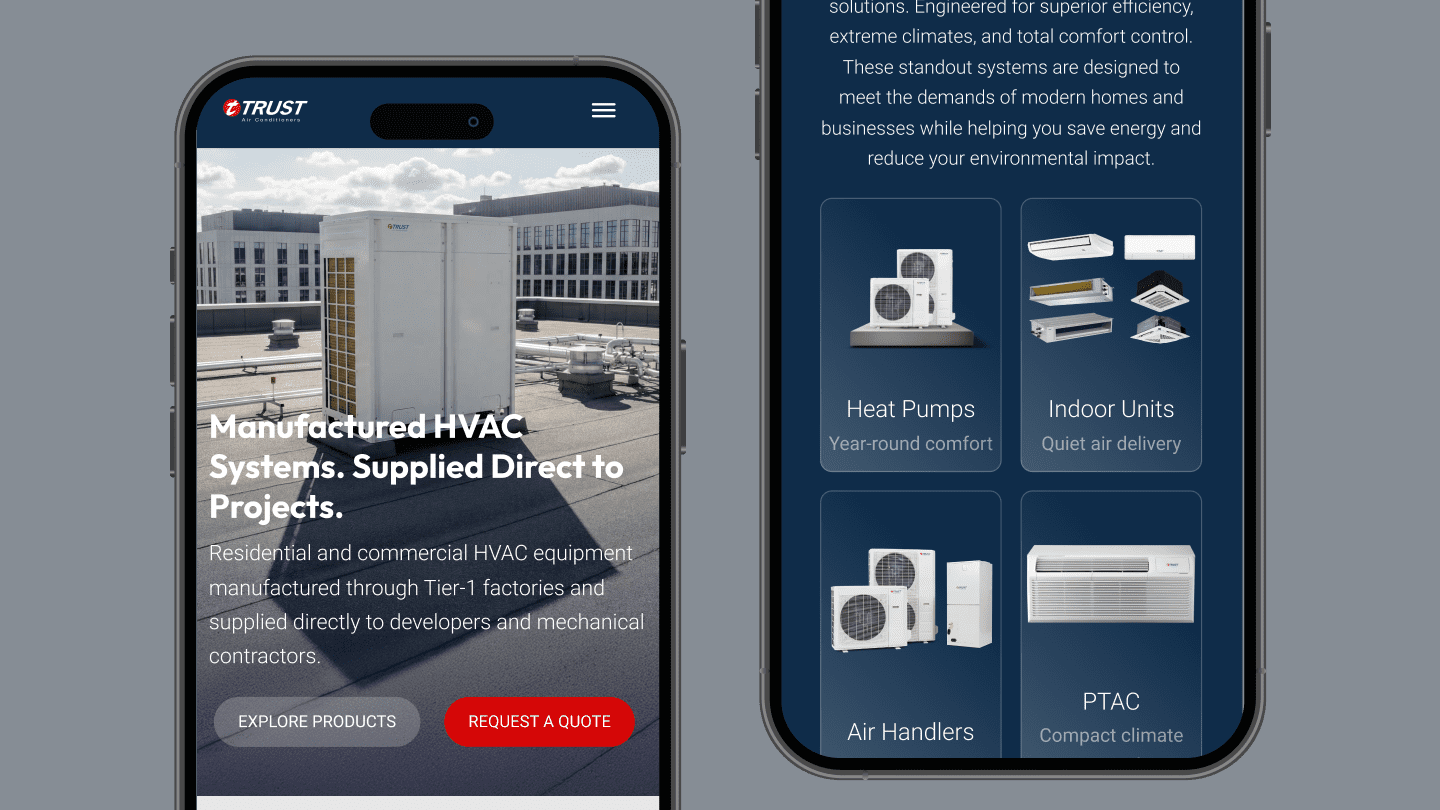
Because many users browse technical websites from a mix of desktop and mobile devices, the responsive experience needed to stay clear and functional across screen sizes. The design was adapted to preserve content hierarchy and maintain usability even as complex product structures moved into smaller layouts.
circle-icon 1

Screen Walkthrough

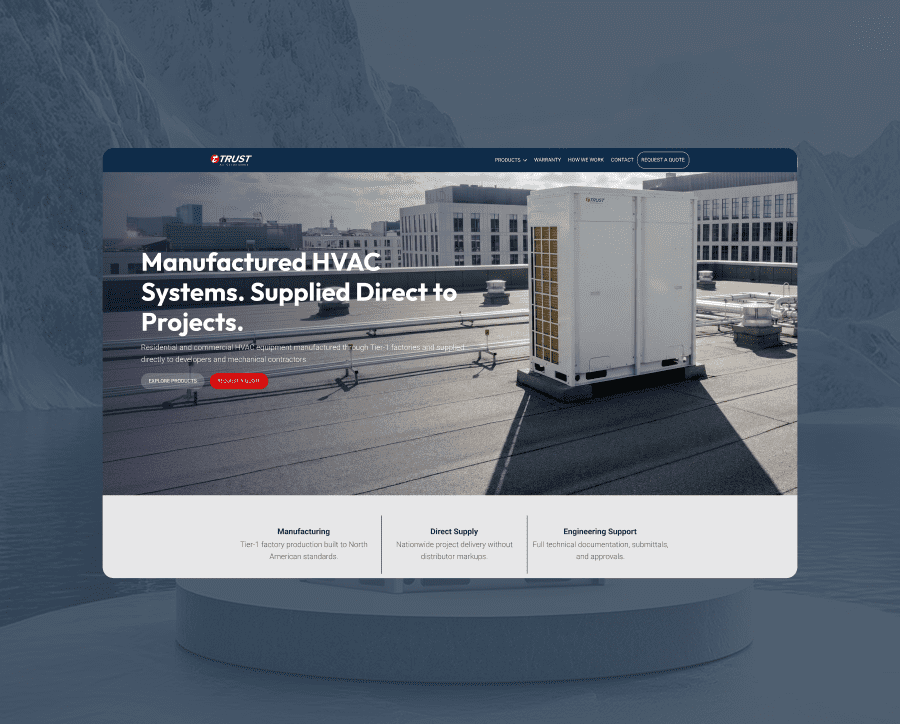
Homepage

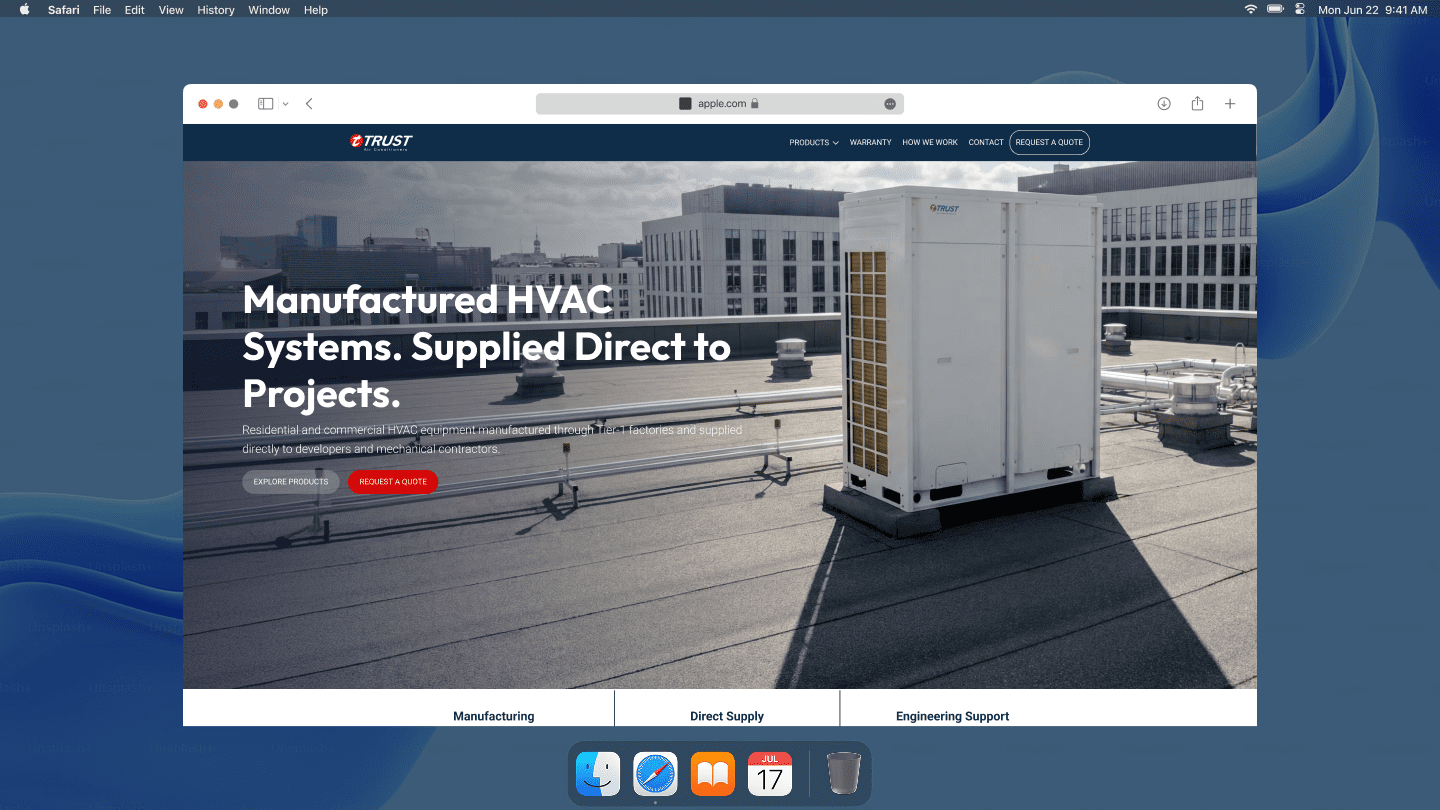
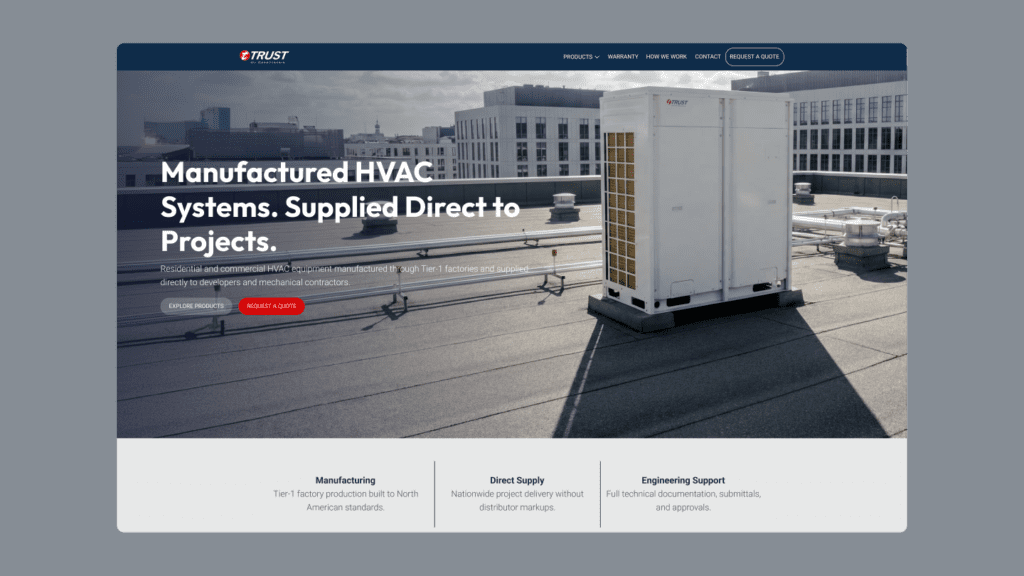
The homepage was designed to create a stronger first impression and position Trust more credibly within the North American HVAC market. It introduces the brand, surfaces key product pathways, and gives users clear access to both informational and conversion-focused content.

Product Listing Page

The product listing page was built to make category-level browsing easier. Instead of overwhelming users with disconnected technical information, the layout helps them scan product families more clearly and compare options within a structured system.

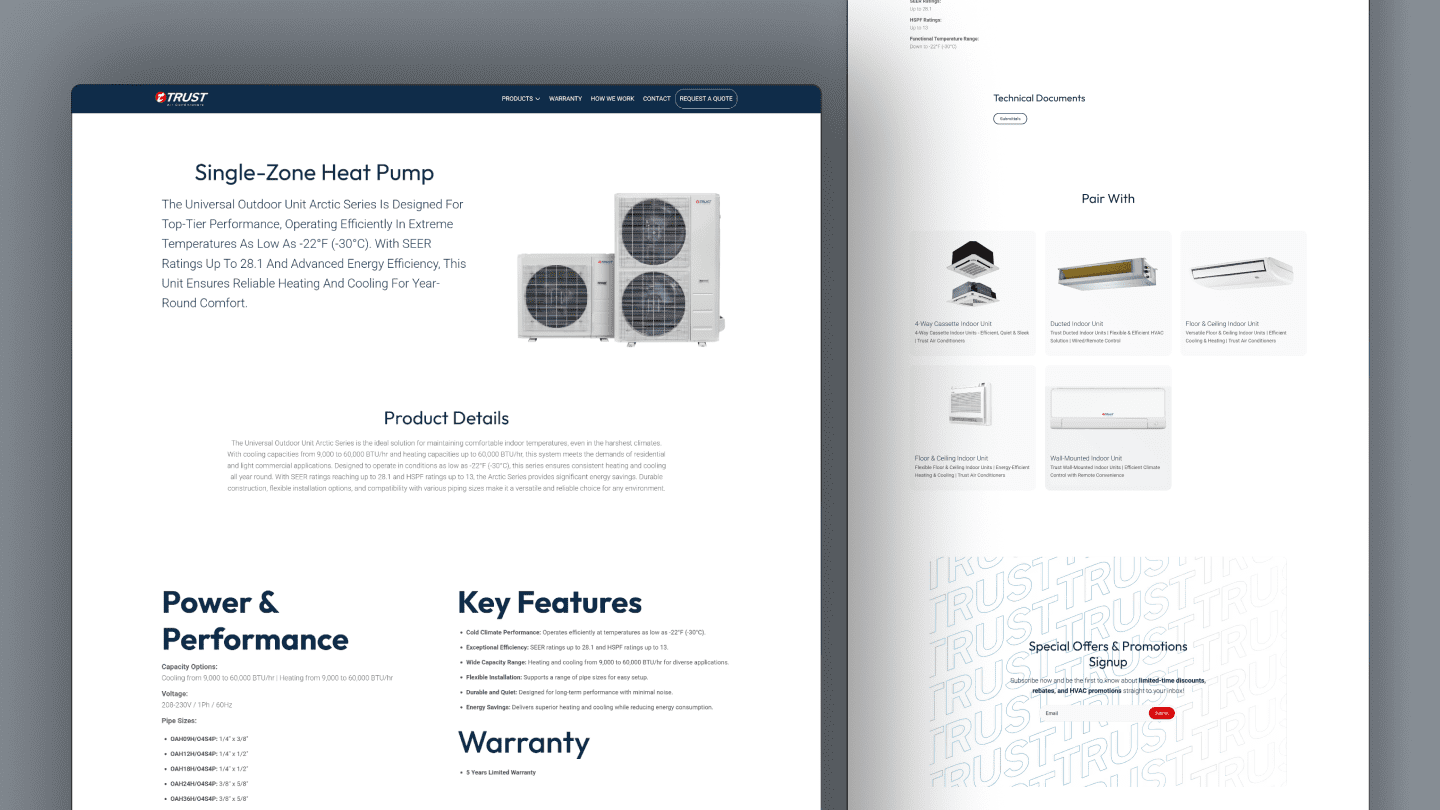
Single Product Page

The single product page had to support both technical depth and usability. It brings together key features, specifications, warranty details, downloadable documents, and compatible products in one place so users can make better-informed decisions without jumping across multiple pages.

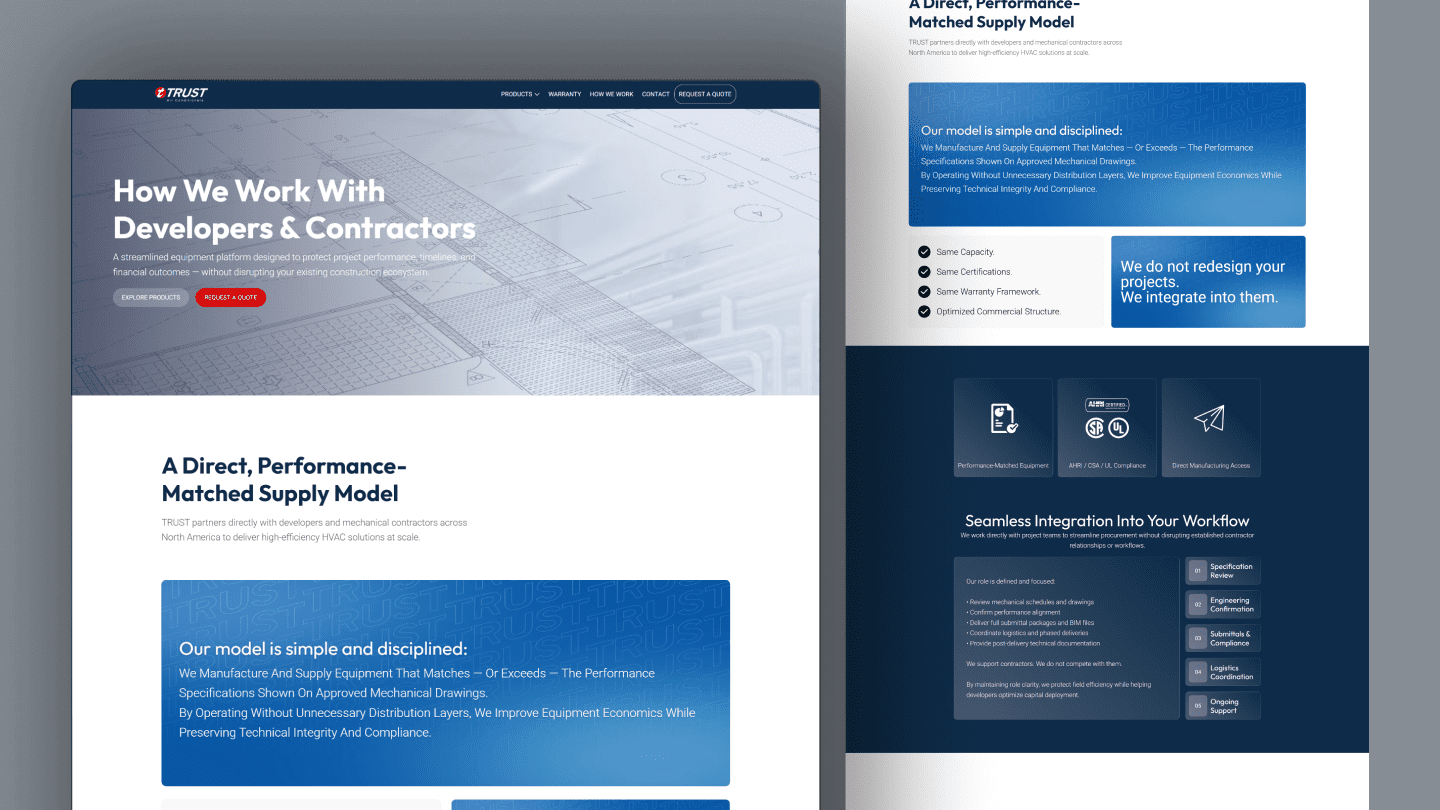
How We Work Page

This page helps explain the company’s working process and gives the brand more structure beyond product pages alone. It supports trust-building by showing that Trust is not only selling equipment, but also presenting a more organized and professional business experience.

Mobile Adaptation

On mobile, the challenge was keeping technical content understandable without making the experience feel heavy. The responsive layouts simplify the hierarchy while keeping the most important information visible and accessible.

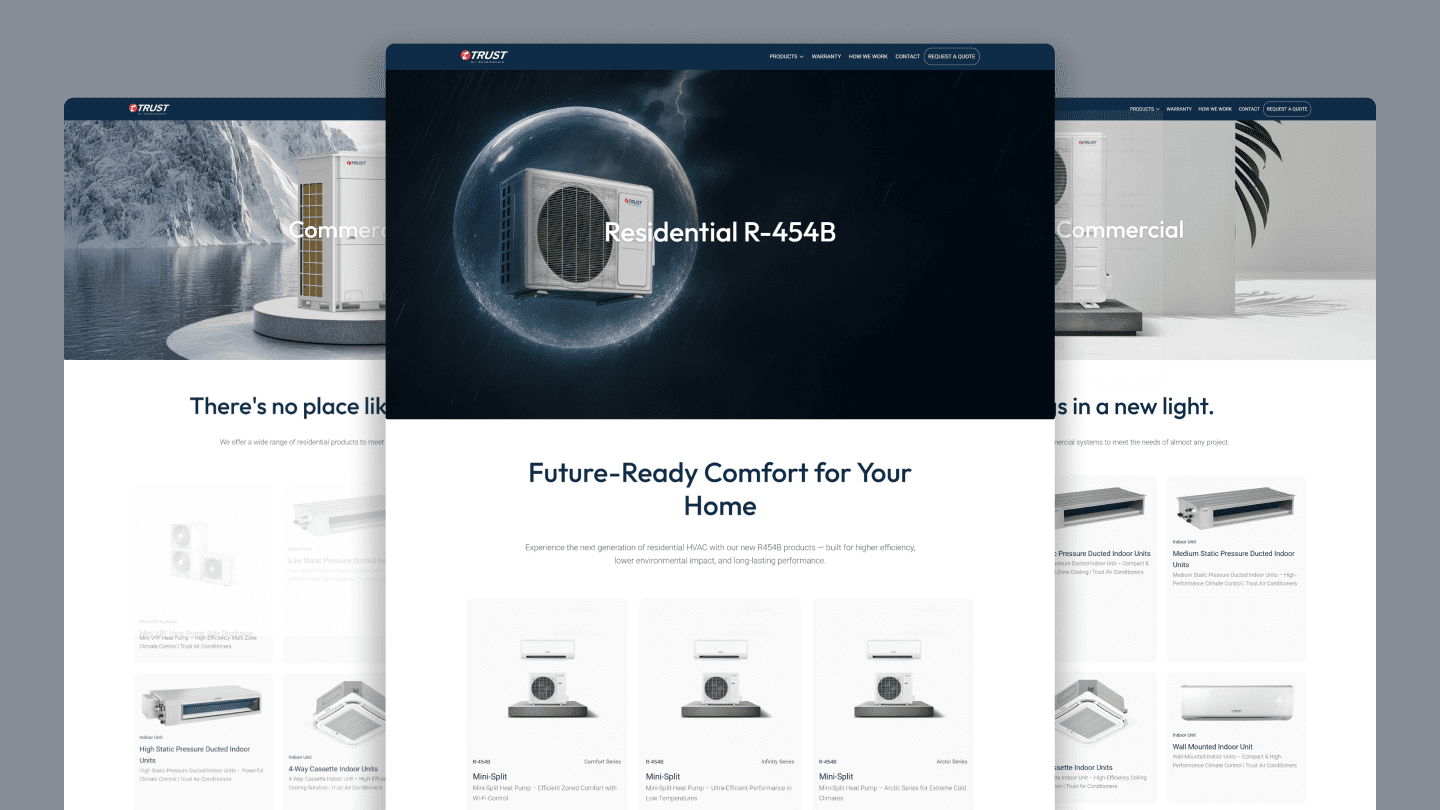
Product Category Variations

To support a broader HVAC catalog, the website needed a consistent system that could scale across multiple product categories without feeling repetitive or confusing. These category pages show how the same structure was adapted across different product lines, helping users browse more confidently while keeping the experience visually organized and easy to scan.
circle-icon 1

Out come

The redesigned website helped transform Trust’s digital presence from an outdated and difficult-to-manage platform into a more scalable B2B business tool. By improving the information architecture, rebuilding the CMS structure, and creating a cleaner, more credible interface, the site became better aligned with the company’s market-entry goals.

The project also helped improve SEO performance, strengthen the brand’s online presence, and support more effective lead generation. Combined with broader updates to the company’s Facebook and LinkedIn presence, the website helped increase qualified monthly leads by 70%+ and brought in inquiries from a more relevant target audience.

Other Projects

DevelopmentUX/UIWeb Design